
Welcome to the
Cowichan Valley Starfinders
The Cowichan Valley Starfinders are a non-profit society who’s mandate is to promote and enjoy amateur astronomy in the Cowichan Valley on Vancouver Island, British Columbia, Canada

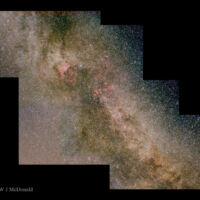

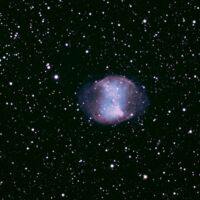
Image of the Wild Duck Cluster taken in very dark skies at the Island Star Party.
Details
2010-09-04 at the Island Star Party - Bright Angel Park, Vancouver Island.
Conditions - clear and very dark, Moist and 10 deg C.
Equipment - WO 105mm refractor with modifed Canon T1i camera on HEQ5 mount.
Exposure - 56 - 1min lights at ISO 800 with darks and flats used for calibration.
Processing in Images Plus and Photoshop.

Conditions - clear and very dark, dry and 15 deg C.
Equipment - 300mm Canon L series lens with modifed Canon T1i camera on Astrotrack mount.
Exposure - 37 - 2min lights at ISO 800 with darks and flats used for calibration.
Processing in Images Plus and Photoshop.
m27crop

Wide field study of the Cygnus region using a 50mm lens to obtain 5 images covering the whole constellation and surroundings. Following the fifth image is a mosaic obtained by combining the individual images.
Details:-
Equipment - Modified Canon 350D on Astrotrack mount.
Exposure - each image is a stack of 5 to 19 light frames taken at f/4 and ISO 200 for 4 min each.
Processing - Frames were aligned and digitally developed in Images plus and the mosaic was done in Photoshop.
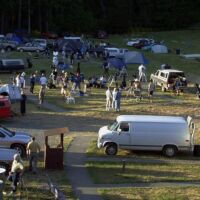
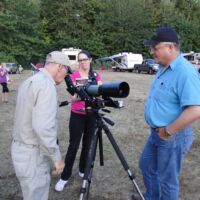
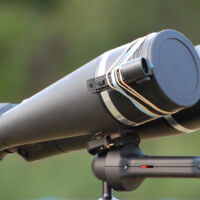
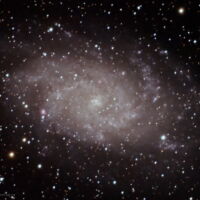

Image of M22, the other great globular cluster (along with M13) in the northern sky. It was taken in very dark skies at the Island Star Party.
Details
2010-09-04 at the Island Star Party - Bright Angel Park, Vancouver Island.
Conditions - clear and very dark, Moist and 10 deg C.
Equipment - WO 105mm refractor with modifed Canon T1i camera on HEQ5 mount.
Exposure - 33 - 1min lights at ISO 800 with darks and flats used for calibration.
Processing in Images Plus and Photoshop.
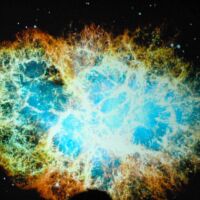
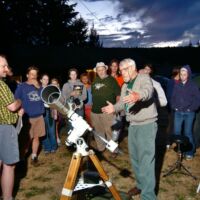
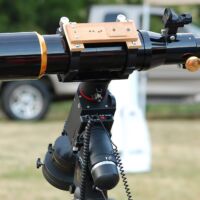
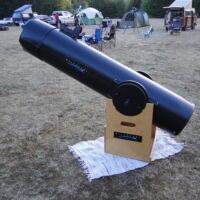
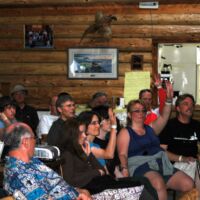
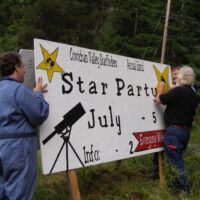
OLYMPUS DIGITAL CAMERA
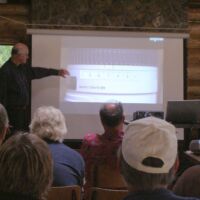
OLYMPUS DIGITAL CAMERA
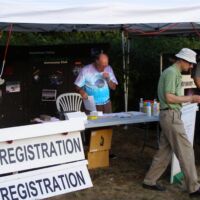
OLYMPUS DIGITAL CAMERA
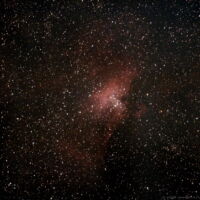
M16 Eagle Nebula
Monthly Club Socials
Meeting have been canceled until further notice
Astronomy & Space News
- Betelgeuse Is Disturbed By Its Companion Star
- Ancient Comets Carried Organic Compounds, But They Didn't Survive Crashing Into Earth
- Have a Screamingly Good Halloween Week
- The Rubin Observatory Finds Its First Dwarf Planet Candidate
- The Leap Second is History. Long Live the 'Leap Hour'
- Glowing Salt Crystals Tracked Radiation Aboard Artemis I
- Rubin Observatory Detects Record-Breaking Asteroids
- NASA’s Artemis I mission reveals surprising radiation levels near the Moon
- NASA Systems Engineering Team Details HWO Mission Architecture
- Unveiling Starbirth Mysteries
- Massive Stellar Collisions Could Explain Early Supermassive Black Holes
- This Oddbal Reflective Lava World is Challenging to Understand
- Hubble Will Give the Roman Space Telescope a Helping Hand
- A Deep-Mantle Garnet Might Hold the Secret to Ancient Martian Magma
- James Webb discovers a scorching lava planet with a “giant sunscreen”